
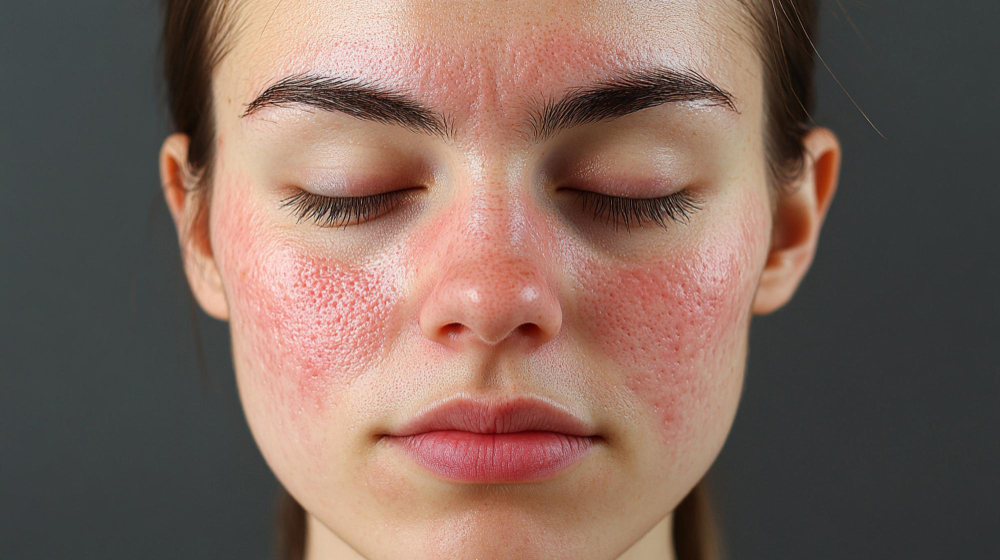
What is Rosacea?
Rosacea is a common skin condition that causes persistent facial redness and visible skin changes. Many people notice their cheeks, nose, chin, or forehead turning red for long periods. Sometimes, small bumps or pimples may also appear. Although rosacea can affect anyone, it is most common in adults with fair skin. Importantly, rosacea is not contagious. While it can be bothersome, effective treatments are available. According to the World Health Organization and the American Academy of Dermatology, early recognition helps manage symptoms better.
Common Symptoms of Rosacea
Often, rosacea starts with easy blushing or flushing. Over time, redness may become more noticeable and last longer. For example, some people develop other skin changes as well. Common rosacea symptoms include:
In some cases, the skin may thicken, especially around the nose. However, not everyone will have all these symptoms. If you notice any of these signs, it is helpful to talk with a healthcare provider.
Causes and Risk Factors
Doctors do not know the exact cause of rosacea. However, several factors may increase your risk. For instance, genetics can play a role. If a family member has rosacea, you might be more likely to develop it. Other risk factors include:
Because triggers can vary, keeping a diary of flare-ups may help identify your personal risk factors.
How Rosacea is Diagnosed
Usually, a doctor or dermatologist diagnoses rosacea by looking at your skin. There is no single test for rosacea. Instead, the doctor will ask about your symptoms and medical history. Sometimes, they may rule out other skin conditions, like eczema or lupus, which can look similar. If you have eye symptoms, an eye doctor may also help with diagnosis. Early diagnosis can make treatment more effective. In some cities, you can find clinics that specialize in rosacea diagnosis and care.
Treatment Options for Rosacea
While there is no cure for rosacea, many treatments can control symptoms. Your doctor may suggest different options based on your needs. For example, common rosacea treatment options include:
In addition, gentle skin care and sun protection are important. Some clinics offer advanced rosacea treatment options in your area. Always follow your healthcare provider’s advice for the best results.
Lifestyle Tips for Managing Rosacea
Because daily habits can affect rosacea, making small changes may help. For instance, you can try these lifestyle tips:
With the right habits, many people find their symptoms improve over time. However, it is important to be patient and consistent.
Preventing Rosacea Flare-Ups
Although rosacea cannot be cured, you can take steps to prevent flare-ups. For example, knowing your personal triggers is key. Additionally, you can:
By taking these steps, you can help keep your skin calm and reduce the chance of flare-ups. If symptoms change or worsen, contact your healthcare provider for advice.